• It must be summer: Facebook has released a controversial study of its users.  Last year, it was the demonstration that the emotional contagion effect did not require direct contact, and could in fact spread across social networks without direct, face-to-face contact (the controversy wasn’t in the result, it was in the fact that FB did the study by manipulating its users’ Newsfeeds to present more happy content)   This time, Facebook’s research wing published a paper in Science purporting to demonstrate that Facebook wasn’t responsible for whatever online echo-chamber effect its users might demonstrate.  Or, at least, if the site did contribute to an echo-chamber, it wasn’t the main contributor.  From the FB blog discussing the paper:

    (more…)

  • By Roberta Millstein

    I'm sure we've all had the experience of committing to the final version of an article, only to think of that one more thing you should have said. Yeah, that just happened to me. Just the nature of the beast, I guess.

    My recent instance has to do with an article concerning GMOs I wrote for The Common Reader, an article aimed at a general educated audience. In the article, one of the claims I defend is that a critique of GMOs is not anti-science, and I note in particular that a critique of GMOs is not the same as a critique of evolution or climate change. (Comments welcome on the article, by the way).

    I was OK with my argument, although I knew that with more space I would have elaborated more than I did. But then I read this from Mark Lynas:

    (more…)

  • I recently talked to a US theologian, who just got a job in a really difficult market. He was reflecting on the challenges facing theologians. You can either work in a secular university, in a religious studies department. Those jobs generally discourage you from making any normative claims, or recognizing religious authorities. Or you can work in a religious college (a so-called confessional college, which is founded upon a confession or creed – in practice almost always some Christian denomination). This sort of job does encourage you to make normative religious claims, but polices those claims to preserve their particular religious identity. There are a few university divinity schools that successfully avoid confronting theologians with this dilemma, but such jobs are far and few between. So jobs at confessional colleges are a theologian's most realistic shot at stable employment. 

    A theologian needs to be careful about the views she's exploring. My interlocutor's new employer was interdenominational, which typically means they'll have a more liberal stance toward doctrinal issues since they can't follow one particular line. But still, he said, you've got to be cautious – test the waters, consult with other faculty members, to see how far you can go. 

    This suggests that the case of infringements on academic freedom where people are fired because they say Adam and Eve aren't historical people, or the case of Thomas Oord* more recently (see here and here) aren't just outliers, but part of a greater problem of lack of academic freedom for the majority of US theologians. How can theologians do cutting-edge work if they have to fear for repercussions all the time? 
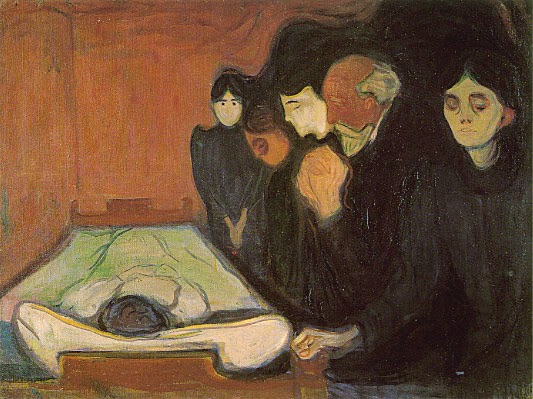
    (more…)

  • by Eric Schwitzgebel

    Here’s a particularly unsentimental view about last, dying thoughts: Your dying thought will be your least important thought. After all (assuming no afterlife), it is the one thought guaranteed to have no influence on any of your future thoughts, or on any other aspect of your psychology.

    Now maybe if you express the thought aloud — “I did not get my Spaghetti Os. I got spaghetti. I want the press to know this.” — or if your last thought is otherwise detectable by others, it will have an effect; but for this post let’s assume a private last thought that influences no one else.

    A narrative approach to the meaning of life seems to recommend a different attitude toward last thoughts. If a life is like a story, you want it to end well! The ending of a story colors all that has gone before. If the hero dies resentful or if the hero dies content, that rightly changes our understanding of earlier events. It does so not only because we might now understand that all along the hero felt subtly resentful, but also because private deathbed thoughts, on this view, have a retrospective transformative power: An earlier betrayal, for example, now becomes a betrayal that was forgiven by the end (or it becomes one that was never forgiven). The ghost’s appearance to Hamlet has one type of significance if Hamlet ends badly and quite a different significance if Hamlet ends well. On the narrative view, the significance of events depends partly on the future. Maybe this is part of what Solon had in mind when he told King Croesus not to call anyone happy until they die: A horrible enough disaster at the end, maybe, can retrospectively poison what your marriage and seeming successes had really amounted to. Thus, maybe the last thought is like the final sentence of a book: Ending on a thought of love and happiness makes your life a very different story than does ending on a thought of resentment and regret.

    (more…)

  • By: Samir Chopra

    In Shame and Necessity (Sather Classical Lectures, University of California Press, 2nd ed., 2008, pp. 68-69) writing on the ancient Greeks' conceptions of responsibility and human agency via the tale of OedipusBernard Williams writes:

    (more…)

  •  The eighteenth century saw a dramatic renewal of ancient ideas of republicanism and democracy (Latin and Greek originated works of course), but that came in the late eighteenth century. The American Declaration of Independence in 1776, the French Revolution of 1789, and the Haitian Revolution of 1791 are the important moments in complex ways which I will not attempt to cover here. The one thing to be noted here is that ideas of republics certainly attracted attention before these events, which are hard to imagine without the influence of those idea, but not in the sense that anyone would have expected the centre piece of the British Empire, the premier nation in Europe, and the centre piece of French colonialism in the Americas to have so dramatically followed through on them.

    The idea of democracy was even more anachronistic looking before these events, which in any case did not lead to full implementation of democracy and certainly not its normalisation, but did take steps in that direction. Earlier in the eighteenth century, even Rousseau did not think of democracy as the ideal. Even allowing that his advocacy of elective aristocracy is in accord with representative democracy, it does not look as if he expected republicanism to sweep through Europe. His text on a constitution for Poland was for an aristocratic state on the verge of extinction as Prussia, Russia, and Austria arranged its complete partition between 1772 and 1795. It was not a model for European republics, nor was it any more democratic than the existing aristocratic commonwealth with a limited monarchy. Montesquieu, Smith and Hume looked upon republicanism as a form of government appropriate to liberty, but not as necessarily superior to monarchy, and maybe less desirable than monarchy in the circumstances of most modern states. 

    (more…)

  • By Roberta Millstein

    About a month ago, David Sloan Wilson posted a transcript of a wonderful phone conversation that he had with Richard Lewontin concerning the (in)famous paper that Lewontin co-authored in 1979 with Stephen Jay Gould, The Spandrels of San Marco and the Panglossian Paradigm: A Critique of the Adaptationist Programme, a paper that attracted a lot of attention from biologists but also from philosophers of biology (too many to cite here). The attention was, and continues to be, both positive and negative, i.e., the paper is a bit of a lightning rod.

    I recommend the interview in full, as it has a lot of wonderful nuggets in it, but here are the things that stood out to me:

    (more…)

  • High registration fees at conferences and workshops ignore the growing group of people who have a PhD but are not securely employed and have no institutional support. Often, there are only reduced rates for students. High conference fees creates a barrier of entry for adjuncts, lecturers and other non-tenure track faculty members to participate. We can make this situation a bit less unjust by pledging to create a reduced or waived fee category for contingent faculty in any conference we organize, lobby with academic organizations we are members of to create this category of fees, or – for more privileged members of the profession – forego honoraria or payment of travel expenses to make lower registration fees possible. Sign this petition to pledge on one or more of the actions we can take http://www.thepetitionsite.com/108/832/205/inclusive-fees-campaign/ 

  • The Supreme Court on Tuesday heard oral arguments in Obergfell v. Hodges, which presents the Court with an opportunity to strike down state bans on same-sex marriage once and for all.  Most observers seem to think that the court will take the opportunity.  The four liberal judges are taken as a given, and both Justice Kennedy and Justice Roberts arguably have obtainable votes.  Kennedy, who has repeatedly departed from his conservative colleagues on gay rights issues, seemed to think that the recognition of marriage afforded a kind of dignity to a relationship, and that there wasn’t any good reason why gay couples should be denied that dignity.  Chief Justice Roberts, as Andrew Koppleman points out, seemed to be considering a very easy way out: bans on same-sex marriage are sex discrimination.

    The sex discrimination argument isn’t immediately apparent, but once you see it, it makes pretty good sense.  Mary wants to marry Joe.  So does Bob.  Mary can, and Bob can’t.  The only reason Bob can’t marry Joe is his sex.  It’s clear, it’s tidy, and it doesn’t require anything legally novel, like declaring that being gay (or otherwise gender non-conforming) makes one a member of a “suspect class” (something like race, where members of the class have been historically the objects of “invidious discrimination;” legislation affecting them as a class is then guaranteed a higher level of judicial scrutiny).  If same-sex marriage bans discriminate on the basis of sex, then they have to survive judicial strict scrutiny, and that seems pretty unlikely.  For one thing, it’s not at all clear what compelling governmental interest is served by restricting marriage only to heterosexual couples.  The states in question were putting their eggs in the basket that marriage is for the sake of having and raising (one’s own biological) children.  As William Saletan points out, that argument makes sense in a vacuum, but if it’s true, then states ought to ban marriage by the old or the infertile.  Attorneys defending the ban apparently had one of those bad-days-at-work, repeatedly falling into incoherence.

    (more…)

  • By Roberta Millstein

    Science Visions is the new internet home for news from the Philosophy of Science Association Women’s Caucus, and its editors are already hard at work collecting their thoughts on philosophy, science, gender, academia, and university life to share with you.

    Just as Donna Haraway’s Primate Visions sought to expand our view of women and primate research, Science Visions seeks to expand our view of women in philosophy of science.  The goal is to gather the best of the web on issues of interest to its readers, from research and teaching issues in philosophy of science and the experience of minorities in the academy to conference announcements, news briefs, and career advice. Its editors will draw on their own perspectives and interests and those of their peers to lend philosophy of science a new set of voices. It will host their original content, as well as items of interest to our readers from elsewhere on the web, calls for fellowships and conferences, and other special features.

    Check out Science Vision's first editorial, from editor Soazig Le Bihan, who argues that our moral obligation towards our students goes beyond providing them with good critical and analytical skills.  (And while you're there, there's some other good stuff posted, so please browse around!)

    UPDATE: And check out our a second editorial from Gillian Barker about a philosophy of science collaboration that seeks to change the world, called the Geo-Functions project.

    [Full disclosure: I am a co-chair of the PSA Women's Caucus, together with Julia Bursten].