• There is a lot of controversy and protest among the students at Stanford University concerning what many are calling the mild punishment of a male undergraduate, found by a university committee to have been guilty of sexual misconduct and sexual assault using force.   The student will receive a five-quarter suspension, which will begin after he graduates, and he will be allowed to enroll at Stanford as a graduate student (he had already been admitted) after taking a “gap year.”

    In this article about the events at Stanford, the Huffington Post details some disturbing statistics about the punishments doled out to sexual assailants at some of Stanford’s “peer institutions”.   It appears to be Stanford’s policy, for example, to allow such assailants to return to campus once their victims have graduated.   Since the victim in this case is graduating this year, the suspension is very short.  (And, inter alia, since 20% of U.S. college women have suffered some form of sexual assault by a male student, but around 5% of male college students sexually assault women, allowing students to return to campus to repeat offend seems like a terrible idea.)
     

    (more…)

  • I originally intended Europe after Habermas and the Populist Surge,  to be a stand alone post and did not have any thoughts about promoting my own tentative views of European politics, and the appropriate theoretical references for discussion. It was just intended to be a timely account of the limitation of one approach to Europe and an indication of the role of one kind of theory in that approach.

    I have been challenged to put forward my own views on the political and theoretical issues, and I do not think I can decently fail to respond, as clearly it is easy to take shots at someone else's point of view that put forward an alternative, which might become a target itself, and might disappoint some people who agree with my critical remarks. Another aspect of putting forward your own views is that it requires more space then defining weaknesses in another point of view, and this process is going to take more than one post. The present post will set up an overview and will be followed by posts dealing with institutions, policies, and theory. 

    (more…)

  • Last year I posted some statistics on tenure-track, postdoctoral, and VAP placements between 2011 and 2013. I aim to continue these analyses for a third year. Along the way, I will post progress on data collection, in the case that corrections are in order. The data below include tenure-track or equivalent hires sourced from PhilAppointments (I will provide a new post with postdoctoral and VAP data soon). Please check the data and make corrections in comments or by email (cjennings3 at ucmerced dot edu).

    (more…)

  • Philosophers on social media, blogs, and other platforms have been increasingly  discussing the Student Union ban on the Nietzsche Club at University College London  in the last day or so. Sorry I'm not providing links, because I'm not looking for an online rumble, but here are some links to news stories. The first thing to say is that this ban is horrendous and the second is that it has been lifted pending legal advice. What also needs to be understood is that the student union decision was not an attempt to ban discussion of Nietzsche, though it certainly circumscribes discussion of Nietzsche in UCL student union facilities.

    The ban was in reaction to a poster of the 'Nietzsche Club' advertising discussion of Alain de Benoist and Julius Evola, alongside Heidegger and Nietzsche. Benoist is the founding and presiding figure of the 'Nouvelle Droite' (New Right, but not to be confused with the Anglosphere free market New Right of the 1980s) in France, which is anti-globalist and anti-free market, also opposing cultural pluralism within nations. Julius Evola (1898-1974) was a writer on southern Asian religion and spirituality, and known to some only in that role. He was also an advocate of authoritarianism, hierarchy and 'tradition',  with tradition to be understood as inherently anti-democratic, anti-egalitarian, and anti-modern. Like Benoist now, he liked to present

    (more…)

  • In less than a week from now, the opening match of the World Cup will take place, between Brazil and Croatia. Inevitably, the World Cup exposes spectators to a variety of national anthems from around the world – many of which we’d be just as well not having to listen to. To be honest, the Brazilian national anthem is not particularly beautiful, especially as the lyrics contain the usual dose of chauvinism; but in an instrumental version, here with the virtuoso mandolin player Hamilton de Holanda, it actually sounds surprisingly good.

    (more…)

  • PhilSci-Archive-Advert10. You can get an accepted but-not-yet-published paper read right away, without waiting for those sometimes lengthy publication times.

    9. You can increase the visibility of your work because
        a) PhilSci-Archive articles score highly in Google searches and
        b) sites like PhilPapers scan PhilSci-Archive and will include links to your papers automatically.

    8. You can get feedback on a work-in-progress from a wider audience than just the couple of people you can think to email.

    7. Your work can be read, for free, by anyone, even those without institutional library access.  

    6. Work that was presented, but never published, can be made accessible.

    5. Papers in those harder-to-obtain volumes will be more widely accessible.

    4. If you are in an underrepresented area of philosophy of science or are an author in an underrepresented group in philosophy of science, you can help to increase the visibility of your area or your group.  [Right now, the papers are disproportionately in philosophy of physics – you can help change that].

    3. PhilSci-Archive is a non-profit organization – like PhilPapers, but unlike, say, Academia.edu or Research Gate. You can feel good about contributing to its flourishing.

    2. After posting your articles, you can linger a bit and check out some of the good work that is there already, including conference papers and (in a new venture) open source journals.  Or you can sign up for an email subscription, the Twitter feed, or the Facebook page.

    1. It's cool, and all the cool kids are doing it.  You can be cool, too.

    (more…)


  • Eric Schwitzgebel recently took up the question of whether an infinitely extended life must be boring. The discussion ended (when I looked at it) with Eric’s fruitfully suggesting that we look at various cognitive architectures and their capacities for boredom over the long run.


    No doubt there are many kinds of minds. Let’s radically simplify the problem, in hopes of arriving at a precise answer for at least one case. (After all, if a mind without much to think about can escape boredom, then presumably a more amply stocked mind can too.) The mind I want consider thinks only of natural numbers and number theory (algebraic and analytic). Its “perceptions” consist in presentations of random natural numbers. Will it be bored?

    (more…)

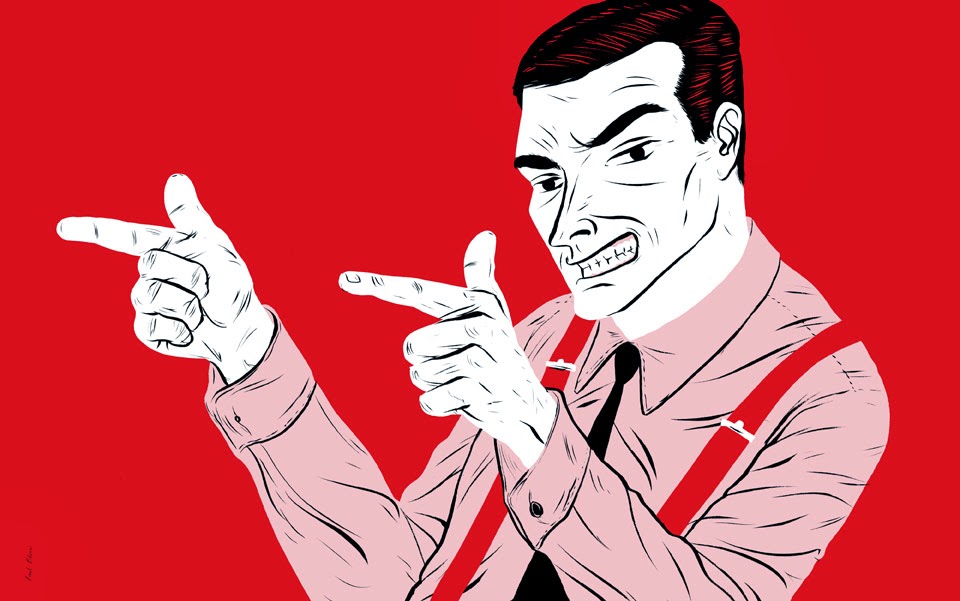
  • I have a new theory of the jerk, just out in Aeon.

    The piece uses the term “idiot” in several places to characterize how the jerk sees the world: “I’m important, and I’m surrounded by idiots!” In light of Shelley Tremain‘s remarks to me about the history of the word “idiot”, I’m wondering whether I should have avoided it. I’d be interested in the thoughts of NewAPPS folks about this. In my mind, it is exactly the sort of word the jerk is prone to use, and how he is prone to think of people — and of course he thinks of people in offensive ways and won’t be bothered by offensive terms unless that’s his particular moral high horse. So there’s a conflict now between my desire to capture the worldview of the jerk with phenomenological accuracy and my newly heightened sensitivity to the historical associations of that particular word.

    [illustration by Paul Blow]

  • At the CHE, with discussion, here:

    1. Never give copies of your books to friends and family.
    2. Never call students by their first names.
    3. Never try to be cool.
    4. Never lament the building of new football stadiums rather than new library wings.
    5. Never become an administrator.
    6. Never allow the Internet in the classroom.
    7. Never teach a class outdoors.
    8. Never refer to yourself by the title "Dr."—unless you are a real doctor.
    9. Never confuse a syllabus with reality.
    10. Never turn down a plum administrative position.

    Rod Dreher is soliciting additions to the list. I would add: (11) Never become visibly angry in the classroom, and (12) Never try to influence your students' political beliefs.

  • Shortly after elections to the European Parliament, and in the midst of political jostling over the name of the next President of the Commision, is a timing that makes a post on European politics and  the idea of Europe  timely, though the issues are constantly with us and I suspect that problems in the European Union will keep it constantly in the news. What looks like serious legitimacy problems for the European Union also has the consequence of creating a European public opinion of a kind, in that Europe is in the news across the nations of the continent. 

    One theoretical approach to Europe seems to me very much questioned  though advocates presumably will not think so. That is the approach of Habermas, who has become the uncrowned philosophical prince of the European Union. The radical egalitarian who makes some claims to some continuity with Marxism is invited to speak events with the highest EU dignitaries present and so appears to be de facto accepted by the European centre right as well as the more left inclined, as the philosophical voice of the European project. His version of Neo-Marxism, Post-Marxism, Liberal-Marxist fusionism,  or however else his thought is best described, is an interesting case of apparent radical critique becoming part of the self-understanding of an elite. His emphasis on the rationality and ethics of political discourse evidently has some appeal to those who make a living from the European Union, and researchers close to that world. The thinking of such people (and I have been personally acquainted with some) is very much along the lines that the EU institutions represent reason and informed decisions making, while strong criticism reflects 'populist' ignorance, stereotyping, and scapegoating.

    (more…)